8/28/14

Labor Day: Our Favorite Holiday to Rest!

Labor Day, celebrated on the first Monday each September here in the United States, is a holiday devoted to the American working community. The purpose of the holiday is honoring the country's workers and their contributions to the strength of our country as a whole.
How Labor Day Started
There is actually some debate as to the origins of Labor Day. It is uncertain whether Peter McGuire, a co founder for the American Federation of Labor, or Matthew Maguire, who was the secretary of Central Labor Union of New York, had the great idea. However, the Central Labor Union's plans were what launched the first Labor Day in America.
The First Labor Day
The very first Labor Day was celebrated on September 5th, 1882. The Central Labor Union then held annual celebrations on September 5th for what they called a working man's holiday. By the year 1885, the Labor Day celebration had spread to many different industrial areas, and after that it began spreading to all industries in the United States.
Labor Day Today
Labor Day today is a huge United States holiday during which we honor the country's workers with a day of rest and relaxation or a day of picnics and parades. This holiday is truly one to honor the many people who work hard to contribute to the economic well-being of our great country!
Our team at Tagawa & Curtis Orthodontics hope all of our patients celebrate Labor Day, and every holiday, safely and happily. Whether you stay in the Brea area or travel out of town, have fun, and don't forget to brush!


Tagawa & Curtis Orthodontics - 714.990.5414
www.breasmiles.com - www.facebook.com/breasmiles

5/22/14

Memorial Day

Memorial Day is not only a federal holiday in the United States, but it is a day of observance and remembrance of those who died in service. Originally known as Decoration Day, this solemn day has been marked on calendars since the end of the American Civil War as a day to commemorate both the Confederate and Union soldiers who fought and died in the war.


Marking the graves of fallen soldiers with flowers, wreaths, or other tokens has been practiced throughout history, but it wasn’t until the mark of the end of the Civil War that a special day was decided upon as the one to spend in remembrance. By 1890, every state in the country was observing Decoration Day, but it wasn’t until 1967 when the name formally changed from Decoration Day to Memorial Day, in order to encompass all fallen American soldiers in all wars and conflicts, and in June of 1968, Congress moved the official date of Memorial Day to the last Monday in May in order to create a three day weekend.

Today, while there is certainly an air of remembrance on Memorial Day, it has become more a day of spending time with family, friends, and other loved ones. This day is also heralded as the start of summer, with many schools finishing for the year around this time. Our team at Tagawa & Curtis Orthodontics remembers it as a day to take solace and remembered those lost.

Traditional observances of Memorial Day are still held, and they often involve raising the American Flag then lowering it to a half-staff position until noon, and then raising it once again to its full height afterwards. The flag is lowered to remember those who’ve lost their lives while in service to their country, and then it is raised to signify our willingness to not let their sacrifice be in vain.

From community parades, backyard cook-outs, and fireworks to formal ceremonies, Memorial Day is commemorated in many different ways. No matter how you choose to spend this day, take a moment to remember those who’ve lost their lives in an effort to preserve our freedom.


5/1/14

May Marks National Physical Fitness and Sports Month!

Did you know the month of May is designated National Physical Fitness and Sports Month? After all, there isn’t a better time to celebrate physical activity as when the warm weather and sunshine makes its way back into our lives!


Now that the flowers are in bloom and the weather has warmed up, it’s easier to go outside and soak up the sun. After spending the winter working out in gyms or doing crunches at home, exercising outdoors can be a lot more enjoyable as well. Whether you enjoy hikes, jogging, or biking, spring gives us a chance to smell the grass, take in the rays, and enjoy the blue sky—all senses that we just can’t duplicate at the gym.

If jogging or biking isn’t your cup of tea, we encourage you to try a sport! Sports have some amazing qualities that we often overlook. Team sports like baseball and soccer, and individual sports like golf and tennis can improve your coordination and agility, in addition to building determination, confidence, drive, hard-work, pride, leadership, and time management.

At Tagawa & Curtis Orthodontics, we always encourage our patients to stay fit by exercising or participating in sports. However, we want to remind you to always wear a mouthguard or other form of facial protection when playing sports. To learn more about obtaining a mouthguard, please give us a call at 714-990-5414.

Tagawa & Curtis Orthodontics - www.breasmiles.com - 714-990-5414


2/4/14

Cavities FAQ

Most of us have had at least one. Some of us have quite a few. So what makes cavities so persistent, keeping more children out of school than any other disease? Usually, the answer is simple: not enough brushing your teeth, flossing and visiting the dentist. Snacking on sweets and slurping sodas doesn't help either. But rather than feel guilty, get informed.

 
Q: What's the difference between tooth decay and tooth cavity?

A: Good question! Most people think tooth decay and tooth cavity are the same thing. But they're not. Tooth decay refers to a gradual process during which bacteria in the mouth produce acids that destroy the surfaces of teeth. Over time, tooth decay can erode enamel to the point that a hole, or cavity, forms.
       

Q: How do I know if I have cavities?

A: Cavities are one of the first things your dentist looks for during a regular dental exam. X-rays allow your dentist to diagnose whether you have dental cavities and how extensive they are. Sometimes a tooth cavity is visible to the naked eye; if you see black holes in your teeth, those could be signs. Another cavity red flag is a toothache or sensitivity to hot or cold food and drinks.
       

Q: How do dentists treat dental cavities?

A: Treatment depends on the size of the cavity and the degree of damage. Although many dental cavities are treated with fillings, onlays may be necessary to treat large cavities affecting the cusps of teeth, while cavities affecting the areas in between the cusps may be treated with inlays. In some cases, dental crowns are used to protect a tooth from further tooth cavity damage. Dental sealants are often applied to children's teeth as a preventative measure against cavities.


Tagawa & Curtis Orthodontics - 714.990.5414
www.breasmiles.com / www.facebook.com/breasmiles

1/28/14

How to Get A Good Night's Sleep


Long an afterthought in the public health community, the importance of sleep is rapidly gaining recognition as a key driver of wellbeing. Lack of sleep is now associated with a host of hazards and maladies including reckless driving and chronic illness.
 
Here are some tips to ensure you get the proper amount of rest you need to maintain good health:
1. Go to bed and wake up at the same time each day.
2. Avoid caffeine and nicotine after noon.
3. Avoid large meals and alcohol right before bedtime.
4. Relax before bed with a book or with music. No electronic screens!
5. Exercise is great, but no later than two to three hours before bed.
6. Make sure your bedroom is a quiet, dark and relaxing environment, and is neither too hot nor too cold.
 
7. Don’t lie in bed awake longer than 20 minutes. The anxiety of being awake can make it harder to fall asleep. Instead, get up and do a relaxing activity until you get tired.
 
Tagawa & Curtis Orthodontics - 714.990.5414


1/20/14

Tips for Breaking Bad Oral Habits

                                              
Did you know that a lot of little things you do (or don't do) on a day-to-day basis affect your teeth's well-being and may fall under a list of bad oral habits? These include not brushing or flossing enough, eating too many sweets too often, or even using your teeth to open a bag of chips.
 
Bad oral habits die hard, but they can be stopped in their tracks by the following tips:
 
Floss at least once a day. It helps remove bits of food and dental plaque in places your toothbrush can't find, helping to keep your gums healthy.
 
Brush at least twice a day. If brushing is not an option, chew sugarless gum (make sure it's sugarless!) for 20 minutes after a meal or snack. This helps prevent tooth decay. 
 
Clean your tongue. Regularly cleaning your tongue with a toothbrush or a tongue scraper helps remove the bacteria that causes bad breath.
 
Replace your toothbrush regularly. Replacing your tooth brush ever 3-4 months is a good idea. Bristles in your toothbrush that are bent and broken don't do a good job cleaning your teeth.
 
Eat a balanced diet. Snacking on sweets without brushing increases the acid in your mouth… and the likelihood of tooth decay. Munch on vegetables and fruit instead.
 
Regular Dental Visits. Your dentist is trained to do damage control in your mouth before it's too late. You should visit the dentist regularly -- every six months.
 
Adding these to your list one at a time is a good start to kick those bad oral habits. By doing a little self-check on your daily dental care habits, you can be on your way to making sure your teeth, your mouth's health and your overall health are at their best.

1/8/14

Avoiding the Baby Bottle Blues


When it comes to thumb sucking, babies are naturals -- maybe because they practice even before they are born. Children begin sucking on their thumb while in the womb to develop the skills necessary for breastfeeding. Not surprisingly swapping a thumb for a pacifier or baby bottle is an easy transition for many kids.
 
In a child's first few years, pacifier use generally doesn't cause problems. But constant, long-term pacifier use, especially once permanent teeth come in, can lead to dental complications. Constant sucking can cause top front teeth to slant out, and bottom front teeth to tilt in. It also can lead to jaw misalignment (such as an overbite) and a narrowing of the roof of the mouth.
 
It is generally advised that children stop or drastically reduce their pacifier use before age 3. If a child is dependent on the pacifier to be calmed and soothed, try giving it to him or her only when absolutely necessary and using positive reinforcement to wean them off the habit.
 
Many children also use a baby bottle longer than necessary. Apart from the risks associated with the sucking motion, bottles also carry a heavy risk of promoting tooth decay if they contain anything other than water.
 
Frequently sucking or sipping on milk or juice from a bottle over an extended period of time will increase your child's risk of tooth decay. When sugars and carbohydrates come in constant contact with teeth they create an environment for decay-causing bacteria to thrive. Tooth decay can lead to painful infection and in extreme cases children may need to have a tooth extraction or dental treatment to extensively repair damaged teeth.
 
Long-term use of pacifiers and bottles can lead to speech and dental problems as your child gets older. Since children develop at different ages, it is a good idea to speak with your dentist and pediatrician to make sure that your infant or toddler's early oral habits don't cause problems.

12/30/13

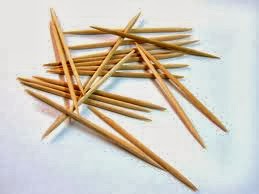
Be Careful With Toothpicks

Most dentists agree that toothpicks should be used sparingly as a method of teeth cleaning and should never be considered a substitute for brushing teeth and flossing. Fact is they should be used only when a toothbrush or floss is not available, for example, when you are in a restaurant and have food trapped between teeth.
 
Toothpicks that are used overzealously can damage tooth enamel, lacerate gums, and even cause a broken tooth in severe cases. People who have bonding or veneers can chip or break them if they aren't careful. Overly aggressive use of toothpicks can severely wear the roots of teeth, especially in cases where gums have pulled away from the teeth and leave teeth with root surfaces exposed, notably in the elderly.
 
Toothpicks date back to 3,500 BC when the earliest known oral hygiene kit featuring a toothbrush was found at the Ningal Temple in Ur. In China, a curved pendant, made of cast bronze was worn around the neck and used as a toothpick. In 536 BC, the Chinese mandated a law that required the use of the toothpick because their armies suffered from bad breath. In the Old Testament, it is written that "one may take a splinter from the wood lying near him to clean his teeth."
 
Today, most toothpicks in the United States come from "toothpick trees" in Maine. The tree is a white birch which has its trunk cut into thin sheets that are cut again to the thickness and length of toothpicks.
 
Dentists can tell when they have a habitual toothpick user in their dental chair. There are the tell-tale signs of toothpick marks. So use them if you have too, but don't make it a habit. Brush and floss instead.
 
Tagawa & Curtis Orthodontics - 714.990.5414

12/23/13

Be Careful When Brushing

Most dentists don’t go a day without seeing patients who are damaging their teeth and gums by brushing too hard. Some report that as many as two out of three patients brush their teeth too hard. This is a problem. A stiff-bristled toothbrush combined with overzealous brushing teeth can cause serious dental problems over time, including gum disease and tooth sensitivity.
 
People think that if they brush twice as hard, they will do twice as much good, In fact, overzealous brushing can cause significant damage to the periodontal tissues and bones that support the teeth. If you used the same amount of force and brush the side of your arm, you could take your skin off.
 
One way to avoid damaging your teeth and gums is to purchase a "soft" toothbrush featuring rounded bristles which are less abrasive to teeth. You should hold the brush between the thumb and forefinger, not with the fist. When brushing, do not `scrub' the teeth with a horizontal, back-and-forth motion.
 
Instead, start at the gum line and angle the brush at a 45-degree angle. Brush both the teeth and the gums at the same time. Push hard enough to get the bristles under the gumline but not so hard that the bristles flare out. It's also a wise move to limit the amount of toothpaste because it is abrasive.
 
The irony is that dentists want people to brush longer, not harder. Children and adults tend to spend less than one minute at a time brushing their teeth, even though removing plaque from the mouth requires at least two to five minutes of brushing at least twice a day. Remember: brush longer, not harder.
 
Tagawa & Curtis Orthodontics - 714.990.5414

12/20/13

New study finds misaligned teeth could be linked to bullying

NEW YORK, N.Y., USA: Having “ugly” teeth may be a significant cause of bullying, according to a new study just published in the American Journal of Orthodontics and Dentofacial Orthopedics. According to the study, kids with buck teeth, gaps in their teeth, crowded or missing teeth, are more likely to be the target of bullying.
The study was conducted among 920 11- and 12-year- olds at randomly selected schools in Amman, Jordan. Dento facial features were rated first, followed by strength and weight.
According to the American Association of Orthodontists (AAO), most orthodontists in the U.S. have seen evidence of bullying among their patients with noticeable teeth problems, but the new study is one of the first to directly quantify how bad the problem is.
To help combat the problem among underserved children, American orthodontists have created a number of networks to provide low-cost or free treatment to children with severe problems.
Dr. Zaid Al-Bitar, head of the Orthodontics and Pediatric Dentistry department at the University of Jordan and one of the study’s authors, created a summary video of the study, which can be found at www.youtube.com/watch?v=Ra-TPj0A8as.
(Source: American Association of Orthodontists)

12/17/13

6 Easy Ways to Prevent Cavities in Children

Kids and cavities seem to go hand in hand. According to the Centers for Disease Control and Prevention, 28 percent of children ages 2 through 5 have at least one dental cavity, compared to 24 percent a decade ago.
 
Although 4 percent may not seem like a lot, that increase represents thousands and thousands of children and cavities -- as well as a trend in the opposite direction of the last 40 years, when tooth decay was on a gradual decline.
 
So if you have children and cavities are a concern, here are six easy ways to reduce the risk:
 
1. Avoid giving your baby juice or formula at night. The sugar in juice and formula causes the bacteria in the mouth to produce the acids that cause baby bottle tooth decay. Use fluoridated water instead.
 
2. Choose low-fat foods from the basic food groups. Raw fruits and vegetables, nuts, whole-grain breads and low-fat dairy products are great for your child's overall health and their dental health!
 
3. If you must, give sweets only as a dessert. If your child must have sweets, limit it to dessert or following a main meal. Late-night snacking and frequent snacking are a major culprit of cavities in children.
 
4. Invest in a water filter. Instead of spending extra on bottled water, invest in a filter for your sink, or a filtered water pitcher. Fluoridated tap water is an excellent resource to help the battle between children and cavities.
 
5. Don't share cups or utensils. Cavities are contagious. So if you have them, you can pass them onto your child by sharing cups and utensils.
 
6. If you smoke, stop. The University of Rochester's Strong Children's Research Center has discovered a link between smoking, children and cavities. Results from a study show that children of parents who smoke are more likely to develop cavities.
 
 
Tagawa & Curtis Orthodontics - 714.990.5414

12/11/13

Dental Care Checklist for Adults

  • Don’t let dental visits slide! Adult life can sometimes be a juggling act and it may feel like you just can't find the time for a dental visit. But making time for regular dental visits now can help keep you out of the dental office in the future.
  • Brush and floss daily, even if it’s late. You've heard this a million times by now, but the importance of regular brushing and flossing can never be emphasized enough. Even if you've been good about your oral hygiene all your life, resist the temptation to let it slide for even one day; the longer plaque stays on your teeth, the more destructive it become
  • Eat well-balanced meals. When you're juggling work, home and kids, it can be tempting to turn to fast food, soda and sugary snacks as a way to save time and feel more energetic. But sugar is a tooth decay demon and can cause you to crash after that initial "sugar high." Be sure to integrate plenty of fresh vegetables into your daily meals and eat fruit, nuts and celery or carrot sticks as snacks.
  • Exercise regularly -- it's good for your teeth! Studies show that people who maintain a healthy lifestyle -- exercise and eating right -- are 40 percent less likely to develop advanced gum disease.
  • Consider treating yourself to cosmetic dentistry. Whether you want a quick boost or a complete smile makeover, there are plenty of cosmetic dental treatments available to help you achieve your dream smile. One-hour laser teeth whitening treatments can make your teeth 8-10 shades whiter, and porcelain veneers can mask stained teeth, chipped teeth or crooked teeth

Tagawa & Curtis Orthodontics - 714-990-5414

12/3/13

Making Dental Visits Easy for Kids

 
With your help, dental visits can be a positive – even fun – experience for your kids. Our staff will spend a lot of time with your kids to help them feel comfortable and understand what they can expect. You can help us make their next visit a successful one by working with us to accomplish this goal!
 
Here’s what we suggest:
 
·        Use only positive words when answering your kids’ questions. Soft, easy, fun and play are good words to use.
 
·        Avoid using words like pain, hurt, needle and shot. These words make kids (and many adults) scared and anxious.
 
·        After treatment is completed, you can help continue the positive experience by praising your child and referring to the fun time they just had.
 
·        DON’T ask negative questions like: Did it hurt? Were you scared? Did you get a shot? These comments could make your child think that there was a reason to be afraid even though they were cooperative and had a good time. It might also make them afraid of future visits.
 
If your child receives any kind of anesthesia, assure them that their “tickly” or “sleepy” tongue will go away in no time. Most kids don’t mind the numbness, and some even think it’s fun – that’s a good thing.
 
 
Tagawa & Curtis Orthodontics - 714-990-5414

11/27/13

10 Tips for a Healthy Thanksgiving

Enjoy the holiday feast without the guilt -- or the weight gain.


By 
WebMD Weight Loss Clinic-Feature

Thanksgiving only comes around once a year, so why not go ahead and splurge? Because gaining weight during the holiday season is a national pastime. Year after year, most of us pack on at least a pound (some gain more) during the holidays -- and keep the extra weight permanently.
But Thanksgiving does not have to sabotage your weight, experts say. With a little know-how, you can satisfy your desire for traditional favorites and still enjoy a guilt-free Thanksgiving feast. After all, being stuffed is a good idea only if you are a turkey!

Get Active

Create a calorie deficit by exercising to burn off extra calories before you ever indulge in your favorite foods, suggests Connie Diekman, MEd, RD, former president of the American Dietetic Association (ADA).
"'Eat less and exercise more' is the winning formula to prevent weight gain during the holidays," Diekman says. "Increase your steps or lengthen your fitness routine the weeks ahead and especially the day of the feast."
Make fitness a family adventure, recommends Susan Finn, PhD, RD, chair of the American Council on Fitness and Nutrition: "Take a walk early in the day and then again after dinner. It is a wonderful way for families to get physical activity and enjoy the holiday together."


Eat Breakfast

While you might think it makes sense to save up calories for the big meal, experts say eating a small meal in the morning can give you more control over your appetite. Start your day with a small but satisfying breakfast -- such as an egg with a slice of whole-wheat toast, or a bowl of whole-grain cereal with low-fat milk -- so you won't be starving when you arrive at the gathering.
"Eating a nutritious meal with protein and fiber before you arrive takes the edge off your appetite and allows you to be more discriminating in your food and beverage choices," says Diekman.

Lighten Up

Whether you are hosting Thanksgiving dinner or bringing a few dishes to share, make your recipes healthier with less fat, sugar, and calories.
"There is more sugar and fat in most recipes than is needed, and no one will notice the difference if you skim calories by using lower calorie ingredients," says Diekman.
Her suggestions:
  • Use fat-free chicken broth to baste the turkey and make gravy.
  • Use sugar substitutes in place of sugar and/or fruit purees instead of oil in baked goods.
  • Reduce oil and butter wherever you can.
  • Try plain yogurt or fat-free sour cream in creamy dips, mashed potatoes, and casseroles.

Police Your Portions

  • Thanksgiving tables are bountiful and beautiful displays of traditional family favorites. Before you fill your plate, survey the buffet table and decide what you're going to choose. Then select reasonable-sized portions of foods you cannot live without.
"Don't waste your calories on foods that you can have all year long," suggests Diekman. "Fill your plate with small portions of holiday favorites that only come around once a year so you can enjoy desirable, traditional foods."
  • Skip the Seconds.
    Try to resist the temptation to go back for second helpings.
    "Leftovers are much better the next day, and if you limit yourself to one plate, you are less likely to overeat and have more room for a delectable dessert," Diekman says.
  • Choose the Best Bets on the Buffet.
    While each of us has our own favorites, keep in mind that some holiday foods are better choices than others.
    "White turkey meat, plain vegetables, roasted sweet potatoes, mashed potatoes, defatted gravy, and pumpkin pie tend to be the best bets because they are lower in fat and calories," says Diekman. But she adds that, "if you keep your portions small, you can enjoy whatever you like."

Slowly Savor

Eating slowly, putting your fork down between bites, and tasting each mouthful is one of the easiest ways to enjoy your meal and feel satisfied with one plate full of food, experts say. Choosing whole grains, fruits, vegetables, broth-based soups, salads, and other foods with lots of water and fiber add to the feeling of fullness.
Spread out the food and fun all day long. At the Finn family Thanksgiving gathering, they schedule dessert after a walk, while watching a movie together.
"We eat midday, and instead of another meal at dinnertime, we continue the feast with dessert a few hours after the main meal," Finn explains.

Go Easy on Alcohol

Don't forget those alcohol calories that can add up quickly.
"Have a glass of wine or a wine spritzer and between alcoholic drinks, (or) enjoy sparkling water," says Diekman. "this way you stay hydrated, limit alcohol calories, and stay sober."

Be Realistic

The holiday season is a time for celebration. With busy schedules and so many extra temptations, this is a good time to strive for weight maintenance instead of weight loss.
"Shift from a mindset of weight loss to weight maintenance," says Finn. "You will be ahead of the game if you can avoid gaining any weight over the holidays."

Focus on Family and Friends

Thanksgiving is not just about the delicious bounty of food. It's a time to celebrate relationships with family and friends.
"The main event should be family and friends socializing, spending quality time together, not just what is on the buffet," says Finn.

11/25/13

Is Oral Piercing Safe?

Oral piercing is a form of body art and self-expression that’s all the rage among teenagers and young adults. While piercings of the tongue, lip or cheek might seem safe because “everyone has them,” that’s not entirely true. The mouth is a moist place, which means it’s a breeding ground for bacteria and infection. And the primary danger of oral piercing is increased risk of infection. There are other risks, too. Oral piercings can also chip or crack teeth, cause nerve damage and produce an allergic reaction to metal. Some people also notice that it’s more difficult to speak, chew and swallow after piercings.
 
Do the smart thing and have your teenager see a dentist before piercing. Learning about the potential risks will make for a happier, healthier loved one.
 
And if your teen decides to go ahead with a piercing, make sure he or she keeps it clean! This is the single most effective way to fight off infection. And if your teen notices any of the following symptoms, schedule a dentist appointment right away:
 
·        Pain, soreness or swelling
·        Chipped or cracked teeth
·        Damage to fillings
·        Sensitivity to metals
·        Numbness


Tagawa & Curtis Orthodontics - 714-990-5414

11/18/13

Common Dental Myths: Fact or Fiction

Myth: I can’t see any problems with my teeth, so I don't need to go to the dentist.
 
Fact: There are dental problems that aren’t visible to the naked eye – gum disease, hairline fractures and root canal disease are just a few. Dentists use sophisticated technologies – like digital X-rays – to detect problems both on and beneath the surface of your teeth. Plus, it’s a mistake to think of dental visits as emergency care; they’re just as much about preventive care.
 
 
Myth: I don’t need to worry about my teeth because my parents never had problems.
 
Fact: Though genetics may play a small role in predicting your oral health, how well you take care of your teeth will be the single most important determinant in how healthy they are.
 
 
Myth: Chewing sugar-free gum after a meal is just as effective as brushing.
 
Fact: It’s true that chewing sugar-free gum after meals can help clean your teeth, stimulate saliva flow and freshen your breath after meals. But it’s no replacement for a thorough brushing and flossing, which actually removes dental plaque and food debris.
 
 
Myth: I shouldn't brush my teeth if my gums are bleeding.
 
Fact: Bleeding gums can be a sign that you’re brushing too vigorously or gum disease. Keep brushing, but make some adjustments. Use a toothbrush with medium-soft bristles and brush in a circular motion. If the bleeding continues after a few days, see your dentist.
 
 
Myth: If I have a toothache, placing an aspirin tablet next to the tooth will relieve pain.
 
Fact: Putting an aspirin tablet in direct contact with the soft tissues of your mouth will not help relieve a toothache. In fact, this can lead to painful chemical burns. Don't do it! See your dentist for relief.
 
 
Myth: All dental procedures must be avoided during pregnancy.
 
Fact: Although certain procedures, such as X-rays or dental surgery, should be avoided during pregnancy, regular dental treatments should continue as usual.
 

Tagawa & Curtis Orthodontics - www.breasmiles.com - 714.990.5414